Finnish Narrow Gauge
Railway Museum
David Hughes, FRIAI, RIBA — Concept Proposal & Fee Offer
Institutional Authority & Specialist Credentials
This project demands a rare overlap of competencies: active railway practice, heritage conservation, high-performance energy design, and an understanding of how EU funding bodies evaluate technical submissions. No single credential is sufficient.The combination of internationally recognised experience is unique and continues to grow. At the time of writing I have been shortlisted for two UIC Sustainability Impact Awards, two RIAI Awards and have recently co-authored a review of the EU's Energy Performance of Building Directive (EBPD).
View: 2026 UIC Sustainability Impact Awards Background →
View: ICOMOS International EPBD Thematic Analysis (co-author, 19 countries) →
- David Hughes — B.Arch., CPMA, FRIAI, RIBA
- Current Role: Senior Architect, Iarnród Éireann — Capital Investments (35 years active railway practice)
- Chair, UIC WG1: Passenger Railway Stations, Union Internationale des Chemins de Fer, Paris
- Board Member & Treasurer: ICOMOS Ireland — Scientific Committee for Energy & Sustainability
- Past Director & Secretary: Passive House Association of Ireland (3 terms; maximum tenure)
- Conservation Architect: RIAI Accredited since 2007 · BER/PHPP Assessor · nZEB Expert
- Contact: +353 87 357 16 09 · LinkedIn Profile
This has been done before. By this architect. On a railway.
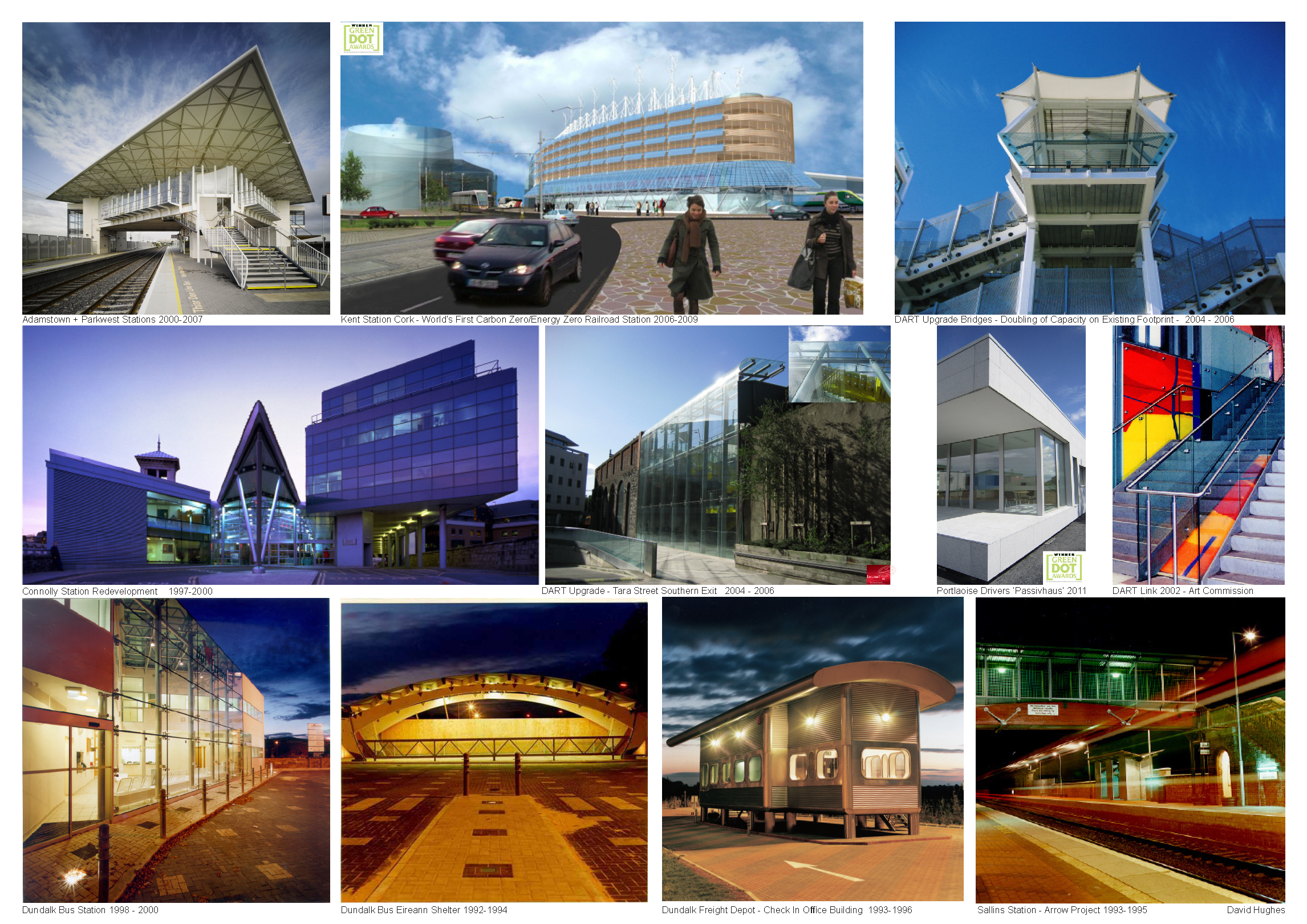
Portlaoise Drivers Building
The world's first Passivhaus building designed for any railway operator, anywhere. Ireland's first non-residential Passivhaus for the state. Candidate for the Living Building Challenge. Winner, 2012 Green Dot Awards (California).
This is not a theoretical proposition for Minkiö — it is a demonstrated methodology, refined over a decade of post-occupancy observation on a working railway.
Kent Station Cork
The world's first net zero energy railway station. Winner, inaugural Green Dot Awards 2008. The design methodology later refined at Portlaoise — and now proposed for Minkiö.
Greendotawards Kent Railway Station, Cork City, Ireland Revision 1.pdf
Connolly Station Dublin & Tara Street
Two Brunel Awards — among approximately five architects worldwide to have won twice. Joint 2008 winners included Foster + Partners and Grimshaw.
Why Passivhaus is not optional — and what it means in practice
A Finnish winter is unforgiving. The instinct is to separate the locomotive maintenance bay from the clean exhibition spaces with an insulated fire wall — treating them as two different thermal problems. This instinct is expensive and thermodynamically wasteful.
At Passivhaus standard, the entire 1,625 m² building — including the maintenance bay — has a peak space heating demand of just:
It was proposed to not heat the maintenace bay, however with these ultra low figures, the maintenance bay alone (10 m × 55 m = 550 m²) requires just 5.5 kW — the equivalent of two powerful hair dryers! — to stay warm throughout a Finnish winter. The volunteers who restore these locomotives will have indoor comfort as they work.
The Passivhaus Guarantee
Maximum space heating demand: 15 kWh/m²/year — a certified standard, not an estimate.
Total annual heating energy for the full building: ≤ 24,375 kWh/year or €7,500 /year. A conventional uninsulated industrial shed of this size in Finland might require 10–15× this energy budget. Passivhaus does not add cost — it eliminates operational cost over the building's lifetime.
International Peer Recognition — May 2026
Prof. Dr. Wolfgang Feist — inventor of the Passivhaus standard, Passivhaus Institut Darmstadt — contacted this practice unsolicited in May 2026 to discuss a joint thematic session on energy efficiency in listed buildings at the next International Passivhaus Conference, Innsbruck. The ICOMOS EPBD Thematic Analysis co-authored by David Hughes was shared as supporting material. The originator of the methodology recognises this practice as a peer.
Concept Development & EU Grant Submission Package
your budget.
If this is the design you want to build, the fee conversation is straightforward. Tell me what funding you have available for Phase 1 and I will confirm exactly what I can deliver within it.
The design does not change. The quality does not change. What changes is simply the depth of documentation produced at this stage before Phase 2 funding is confirmed.
All reasonable travel and subsistence for in-person meetings reimbursed at cost.
What Phase 1 Can Include
- Measured concept design — all three building sections, phased construction logic
- Passivhaus energy modelling (PHPP) — certified methodology, Finnish climate data
- Thermodynamic strategy — locomotive bay / exhibition / artefact conservation / public realm
- 1930s heritage aesthetic — east and north facades, detachable film-set strategy
- Structural and material strategy — CLT diagrid frame, piled foundation concept
- EU grant application supporting architecture narrative and technical annexes
- Concept renders and presentation drawings
Deliverables scaled to available budget. The concept is established — what varies is the depth of documentation at this stage.
Lead Consultant — Full Project Execution
on appointment.
Phase 2 covers all work stages from developed design through to construction completion, including supervision across the three phased construction contracts anticipated in the brief.
Fee to be negotiated and agreed upon confirmation of Phase 2 construction funding. The Lead Architect role — once established through Phase 1 — continues across all phases.
Project Methodology
The Lead Architect sets the Passivhaus vision, structural logic, and heritage aesthetic strategy. Production drafting, structural calculations, fire engineering, and mechanical systems will be executed by appointed local Finnish sub-consultants — ensuring full compliance with Finnish building regulations and seamless local authority engagement.
Phased Construction
The brief correctly anticipates three sequential construction phases, each potentially separated by funding cycles. The Lead Architect role is continuous across all phases. Scope and fee for each phase confirmed as funding is secured.
Why this building matters beyond Minkiö
Industrial Heritage
Finland's narrow gauge railways are an unrepeatable record of the country's industrial and social history. This building will be the first dedicated exhibition facility in Finland for that story — and a landmark on the European industrial heritage route.
EU Funding Context
The co-authored ICOMOS Thematic Analysis on the EU Energy Performance of Buildings Directive — covering 19 European countries — was published January 2026. This practice understands precisely how EU funding bodies evaluate heritage infrastructure proposals and what technical evidence they require.
How This Came About
This commission arose through the international Watford Group — a peer-to-peer exchange of railway architects and engineers active since 1999. David Hughes is a founding-era member and current steering group participant. The project was introduced through Pirjo Huvila, the Finnish representative.
David Hughes
B.Arch., CPMA, FRIAI, RIBA
+353 87 357 16 09
LinkedIn
References & Appendices
Project Files & Publications
- Train Drivers Building Build Corrected Greendot 2012.pdf
- 16PHT_Template_Poster Train Drivers Building Two Page Version Final 6 February 2012.pdf
- Portlaoise July Drivers Building Photos Iconic Shot Parapet Trim Corrected.jpg
- Greendotawards Kent Railway Station, Cork City, Ireland Revision 1.pdf
- CMO Brunel Final 250624.pdf
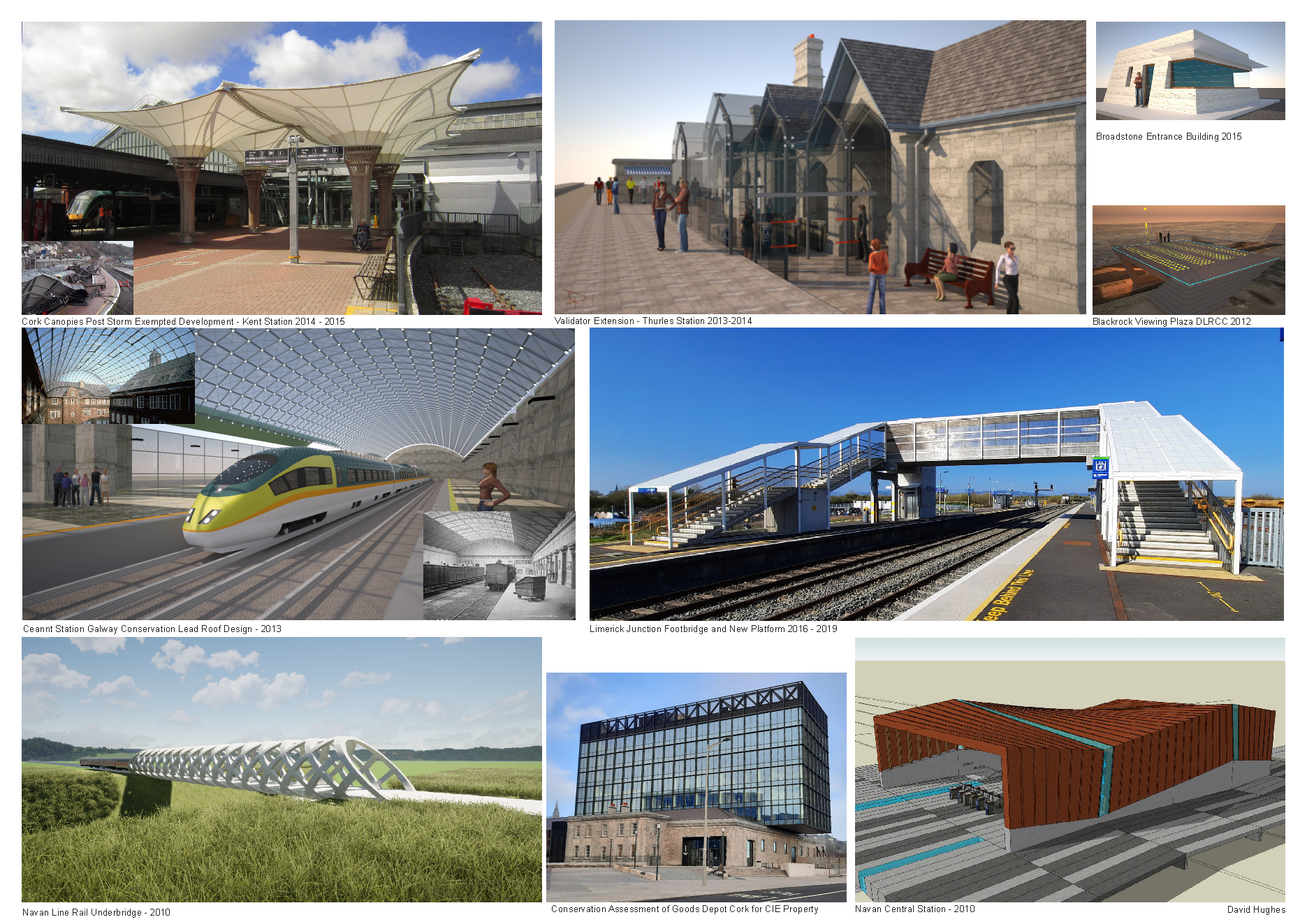
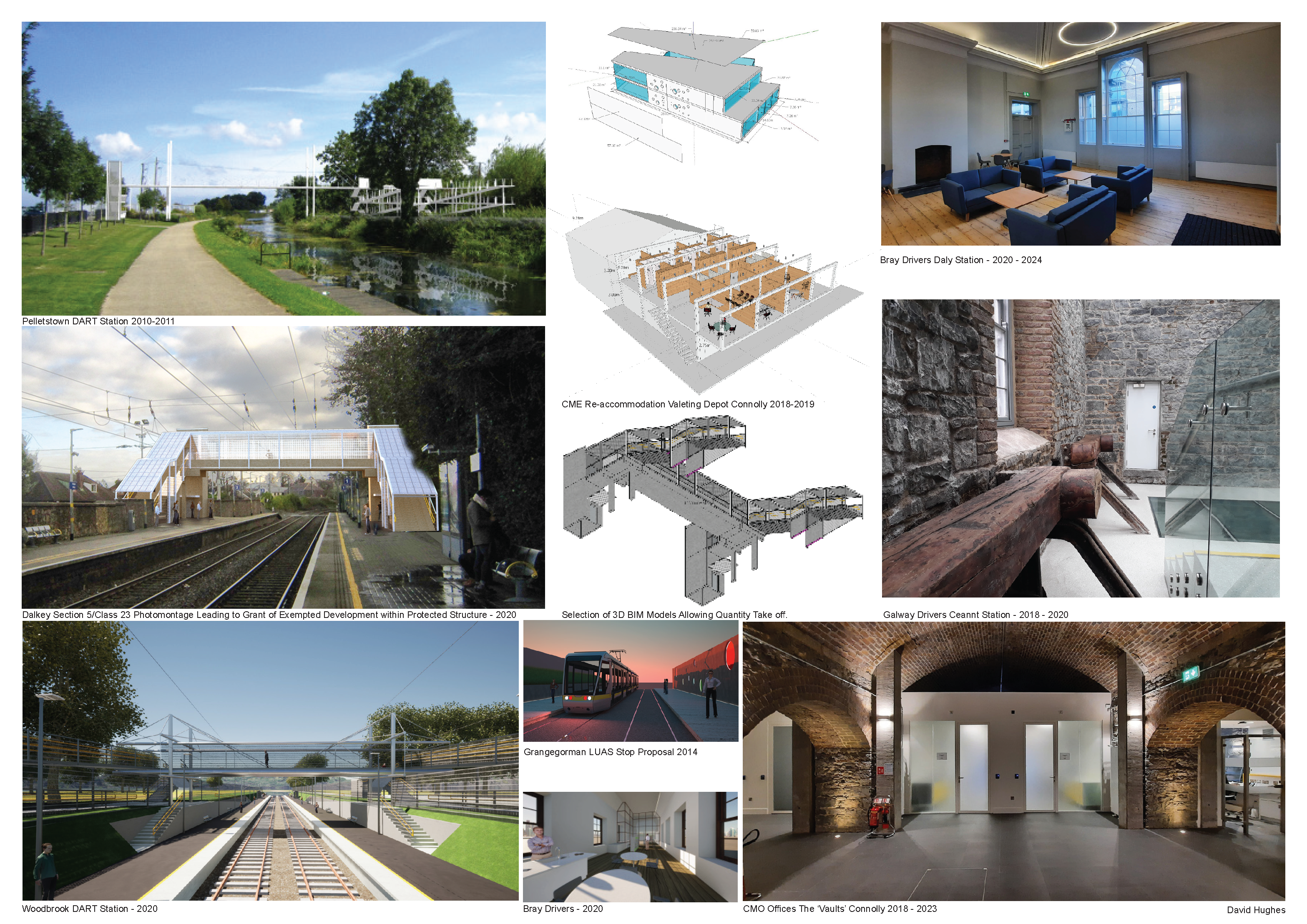
Selected Project Images · Visual Carousel